
Moving Beyond Shiny Object Experimentation with GeoAI - GIM Interview
This blog summarizes the interview Dr. Nadine Alameh did with GIM International in April 2026. Here’s what Nadine says about the interview.
I founded LunateAI because I saw a growing need for trusted guidance at the intersection of geospatial technology, Earth observation, and artificial intelligence. As AI continues to accelerate and data volumes expand at an unprecedented pace, I believe organizations need help cutting through the noise and focusing on what truly matters. For me, the real opportunity lies in moving beyond simply viewing geospatial data to actually engaging with it—asking questions, uncovering insights, and using AI to transform information into actionable decisions. This shift is enabling us to move from passive observation to active prediction, creating powerful new possibilities across industries such as climate resilience, infrastructure, finance, agriculture, and real estate.
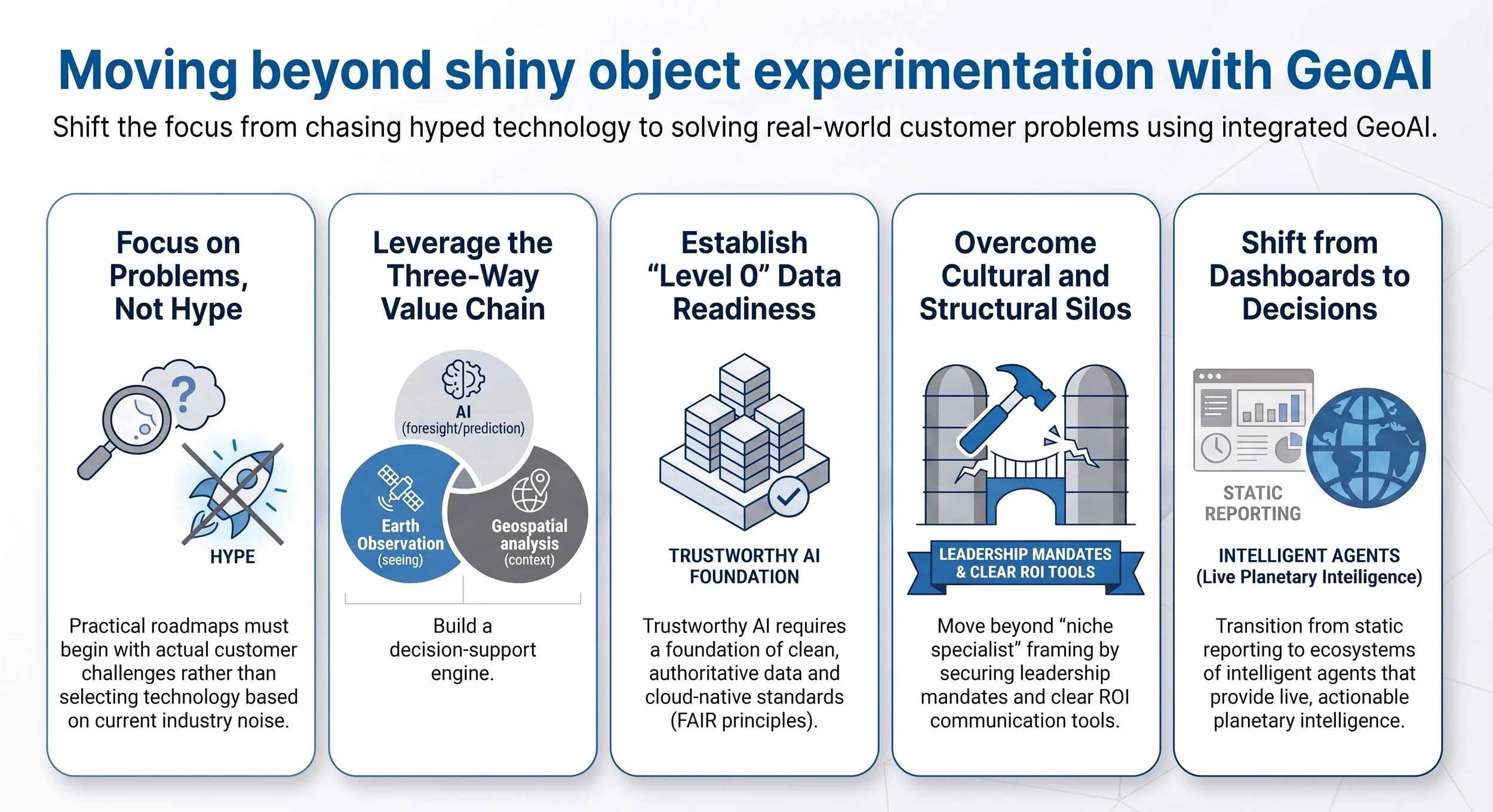
One of my strongest convictions is that organizations must move beyond what I call “shiny object” experimentation. Too many teams are captivated by emerging technologies without first defining the real-world problems they need to solve. In my experience, the greatest barriers to GeoAI adoption are often not technical but organizational: leadership alignment, governance, communication of ROI, and the ability to embed geospatial intelligence into everyday decision-making. That is why I focus on helping organizations develop practical roadmaps rooted in customer needs, ensuring that AI and geospatial technologies become strategic assets that deliver measurable outcomes rather than isolated pilot projects.
Looking ahead, I see a future in which AI fundamentally redefines how spatial information is generated, interpreted, and consumed. Intelligent agents will increasingly work alongside us, gathering data, running analyses, creating applications, and supporting complex decisions in real time. However, none of this vision can succeed without trusted, interoperable, high-quality data. My years working to advance FAIR geospatial principles reinforced a simple truth: reliable AI depends on reliable data. As our industry enters this transformative era, I believe we must remain focused on meaningful challenges, invest in people and leadership, and build systems that are ethical, trustworthy, and designed to serve society.
